Your Brain Believes What You Rehearse: Retraining the Nervous System for Stress and Discomfort
This article includes:
What reduced anxiety attacks
A look at neuroplasticity
Managing your allostatic load
Exercising the stress threshold
How I’m training for the life I want
“The goal is not to eliminate discomfort from life. The goal is to be someone who can keep moving through it.”
“What’s going on in your head right now?”
I’m going to die in the middle of nowhere.
It’s going to scar you for life.
If I die and they rename this area after me, it would sound clunky as f@#k.
I suck in air and try for a long exhale that comes out more like a car backfiring than a smooth sigh.
Damn you Sam.
I look up at the fluorescent green forest canopy, highlighted by the sun and swaying with the wind.
What if resilience isn’t the absence of symptoms, but the ability to continue operating despite them?
I put my head down and concentrate on making it to the next bend in the trail.
***
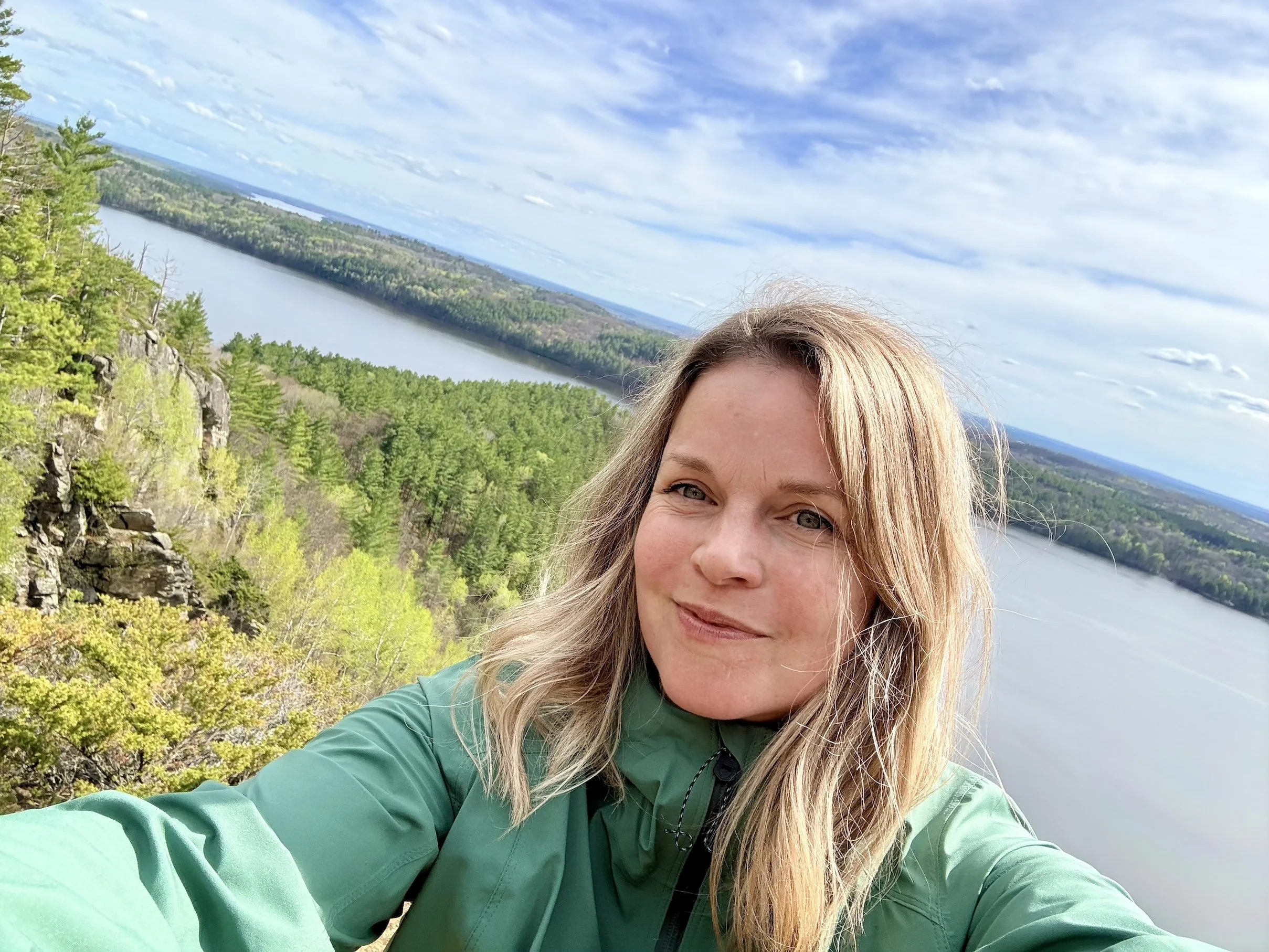
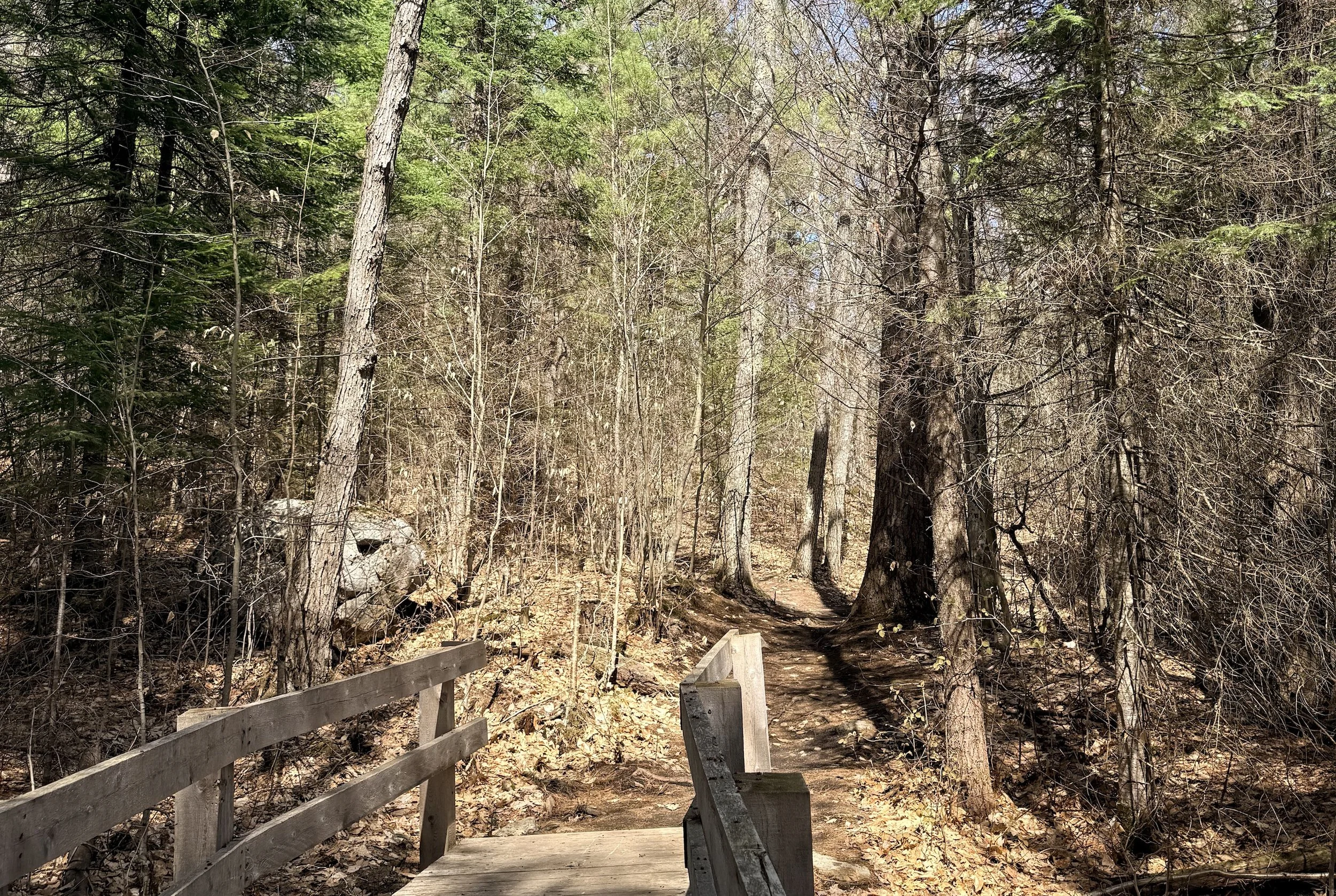
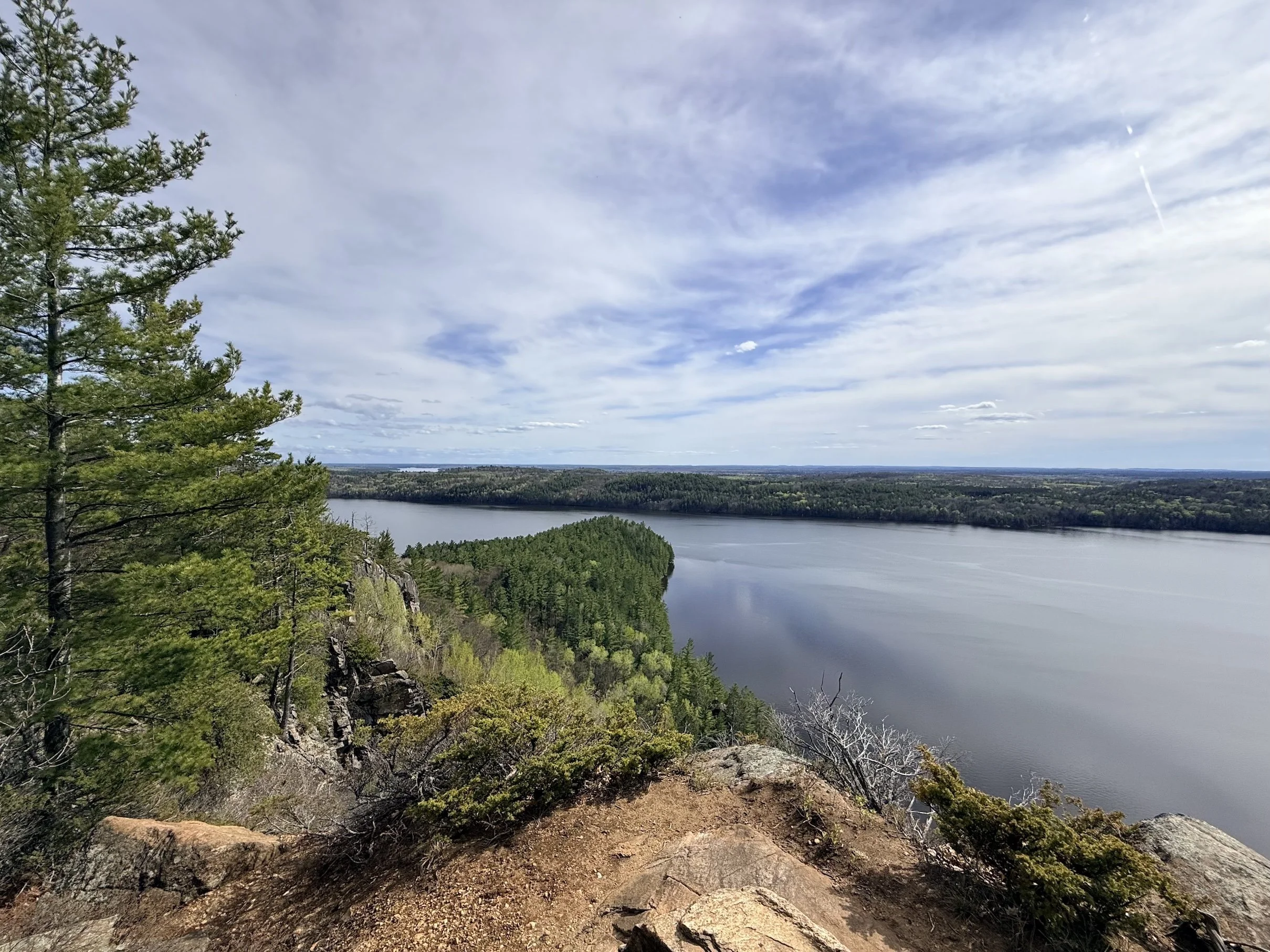
My friend Pablo (an avid adventurer and marketing expert) and I hiked Oiseau Rock in Pontiac region of Quebec. It’s one of my favourite trails with 9kms with mild elevation and dips, roots and rocks, and ponds and dramatic lookouts. It’s a bluebird day. The trees are fluorescent green with new buds, blue jays colour the branches, and large erratic rock shadow us along the trail.
We’ve hiked 5kms and were on the return when it happened.
The colour drains from my face, then flushes. A wave of nausea hits.
My brain becomes heavy.
My limbs feel like they’ve cemented, weighing ten times what they did only minutes ago. like wearing one of those sumo wrestling suits.
The sun is setting soon.
There’s no cell reception.
I’m going to die in the middle of nowhere.
Instead I respond aloud with “I don’t know.”
Because even though I don’t feel it, I’m perfectly ok.
Not in a flippant way, but in the way that I have a hiking buddy. We carry emergency kits. The car isn’t far. Conservation staff are at the main gate.
And I’m not physically injured.
I’m simply having the biggest anxiety attack in over two years, my thoughts are constant barrage of melodrama, and there’s still 4kms to hike out to the car.
The Prediction Problem
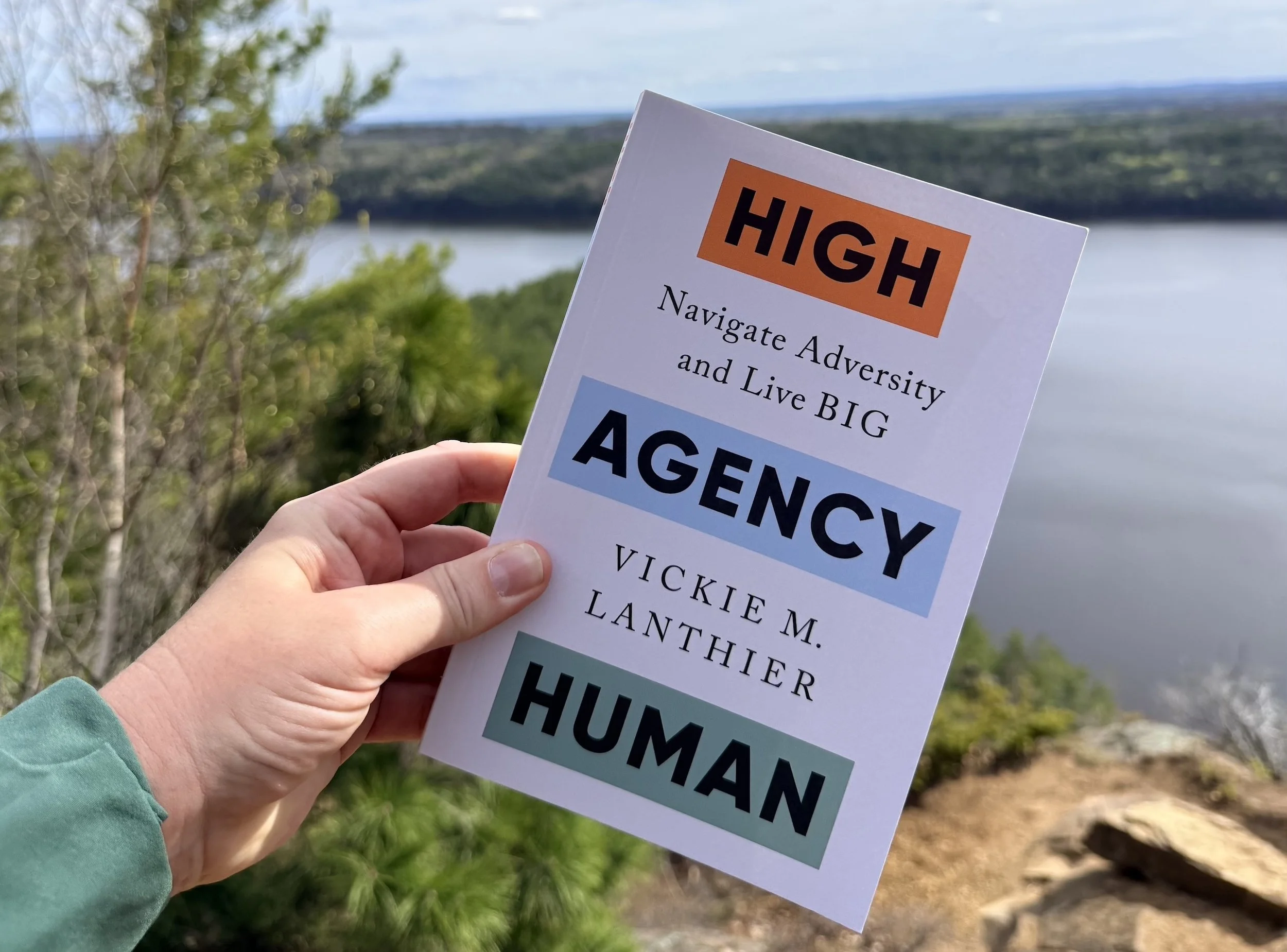
Sam isn’t a person, he’s a prediction. Sam is what I’ve named the neuro circuit in my nervous system that tells me that heat + high heart rate = all-the-bad-times-ahead in the form of an anxiety attack. This neuro pathway was created, then re-enforced after having a viral infection. Acute anxiety after an infection is more common than you’d assume. I openly talk about this experience in my book, High Agency Human. I went from daily attacks that were incapacitating to maybe a mild one every few months. It’s taken a village, and I’m proud of the progress.
So Sam, Sam surprised me with his re-emergence on the trail.
You don’t need anxiety attacks to recognize this pattern. We all live inside reinforced predictions. Conflict becomes rejection. Failure becomes shame. Uncertainty becomes danger. Discomfort becomes stop. Different symptoms, same mechanism.
Contrary to Sam, the connection I’m working on strengthening is one where I know that heat + high heart rate = good-times-I’m-fine. Let’s call this one Ed.
The brain strengthens what we rehearse, whether it helps us or harms us.
Ed needs additional reps in the gym.
Naming the neuro circuits that prompt the physiological response to anxious feelings is a form of mental “othering”, a trick I use to separate myself from the experience in a way that serves. It detaches the experience from my identity, and allows agency to enter the scene.
In High Agency Human, I define the term (and title) as “a state where you feel a sense of control over and in life while actively and effectively participating in your own outcomes.”
To my knowledge, to feel that sense of control while influencing outcomes in the case of experiencing anxiety, I need three things:
Awareness,
Understanding, and
Action
Between the road to minimizing anxiety attacks being a lengthy journey, therapy, developing metacognition, and data from my Whoop health tracker – awareness is well in hand.
Understanding and action are ongoing efforts.
How Change Actually Happens
“Our brains are malleable. We can form new neural connections throughout life. This means that no matter how deeply ingrained our habits or thought patterns may be, we have the capacity to change, grow, and adapt to whatever life throws at us. (…) Our very biology is built to adapt.” Excerpt from High Agency Human: Navigate Adversity and Live Big.
Whether is recovery from stroke, PTSD, or changing an undesired behaviour, the components of change remain the mostly the same:
a degree of focus or a strong emotional desire for change,
neuroplasticity,
intervention,
reflection,
sleep, and
repetition.

Open Invitation to the Science and Medical Community: This is my understanding so far, from reading research papers and conducting expert interviews, but I am not an expert myself and openly invite neurologists, neuro scientists, and other experts with weigh in with their professional insights. Please contact me at vickie@vickiemlanthier.com to discuss or share new research and understandings.
Agency is found in understanding our physiology.
It means we have a say over personal and professional input, and life outcomes. We can decide to engage in our health in a manner that serves us best.
If you challenged with PTSD or TBI or stroke for example, then having a base understanding of our physiology can help you can discern which treatment programs are offering a robust and supportive service that promotes your well-being versus joining a treatment that is missing a critical component (ex: psychedelic treatment without psychological intervention, follow up, and oversight) and perhaps not in service to your best possible outcome.
If I experience acute anxiety attacks post viral infection, I can identify the source, access resources, and actively participate in my own recovery by purposely weakening or strengthen neuro pathways.
“The brain strengthens what it rehearses, whether it helps us or harms us.”
Building Resilience on Purpose
I like to think that I’m already a well-weathered and resilience human, no additional effort needed. But that’s not quite right is it. There’s something uniquely humbling about writing about managing adversity and increasing resilience while simultaneously realizing your own nervous system still needs training. It likely always will. Resilience isn’t something you acquire than forget about, it is an aspect of self that requires regular maintenance and upgrades.
There are two specific ways that I work on resilience, by;
1. Managing the allostatic load, and
2. Exercising my stress threshold.
The Weight We Carry
First, let’s understand what is an allostatic load through my metaphor using a red balloon.
Experiencing an adverse event or stress can be like swallowing a red balloon. Stay with me here. Hard to swallow, and then it settles somewhere in the body. After a while, you forget about it. Then another adverse event happens and the balloon fills with a little air. You’re uncomfortable again for a moment, then it subsides somewhat, so you accommodate the remaining discomfort with some behavioural changes. Maybe you start avoiding social events. Then the next adverse event happens, and more air fills the balloon. It hurts initially and it’s painful when you move around too much so now you’re avoiding social events and stopped working out. Aspects of everyday life that support your overall well-being used to be easy and enjoyable, now they are painful and a require effort.
An oversimplified, but you get the picture. Adverse events and chronic states of stress can compound and have significant impact on behaviour and well-being.
Your allostatic load[i] is the cumulative burden of adversity and stress on the body.
A high load threatens to erode your resilience, and an overload can result in the decline of your mental and physical health.
It’s gear towards military, EMS, and medical professionals, but I like this opening from a whitepaper titled Residue[ii] by Dr Preston Cline of the Mission Critical Team Institute; “You have chosen the hard path—a path full of extreme experiences, both good and bad, which leave memories. These memories, in turn, leave a residue within you, which if processed can serve as the fuel that moves us to wisdom and joy. If unprocessed, however, it will begin to build up, to harden, until you can no longer move or breathe, until all you know is pain and sorrow.”
Residue is a sticky word.
And great way of describing what compounds within us over time.
We can manage that stress and “de-load” by:
Mastering the mundane (aka having a strong foundation with nutrition, physical activity, stress management, restorative sleep, social connection, and avoidance of risky substance use).
Seeking additional protective factors such as time in nature, therapy, relaxation, and pursuing activities that promote joy.
Processing the events or stressors doesn’t remove the balloon, but imagine it like letting the air out, the slow release provides relief. You can ease your way back into socials and working out. The constant pain of an over-inflated balloon is gone, along with the risk of it bursting (aka high or overloaded allostatic load).
Training the Stress Response
When done right, purposefully immersing and exposing ourselves to stressful experiences is smart conditioning. Exercising your stress threshold can both widen your The Window of Tolerance [iii] (a concept originating from Dr Dan Siegel is the space between hypoarousal and hyperarousal) and creates a new set point for your ability to handle stress.
I look at changing the stress threshold in two ways:
Changing the relationship to the symptoms, and
Exercising the stress response through purposeful exposure.
At the beginning of experiencing anxiety attacks, any increase in heart rate, no matter how mild, meant an incoming attack. Over time, I’ve trained myself to understand that a mildly elevated heart rate before going to sleep is ok. I can sleep just fine.
Exercising our stress response can be beneficial to being able to adapt to future stressful events. In his book What Happened To You [iv], psychiatrist Dr Bruce Perry states "Predictable, controllable, and moderate activation of the stress-response system has been shown to build our capacity to manage challenges. (…) It’s the dose, the pattern, and the controllability that determine whether the stress is adaptive or harmful.”
On the flip side; “The more our stress-response system is activated in uncontrollable ways, the less able we are to handle even small amounts of stress.” The good news is that we can take control of conditioning our stress response to avoid the latter scenario. The key of course is to purposely expose ourselves to stress in a duration, environment, intensity that promotes growth. (read short, safe, low dose) Examples: public speaking, simulation exercises, fitness challenge.
Now let’s see both managing an allostatic load and exercising a stress threshold looks like in action.
What Actually Helped
What has worked for me (this is by no means prescriptive) to go from having multiple anxiety attacks a day to once a week in 6 months, to next to none in a year, is the following:
Immediate Action
Medical intervention to create the space needed to start addressing the issue.
Playing old school Tetris (dual-processing task that is helpful in grounding but I was cognisant to use it short term and not to allow it to become a form of avoidance).
Identifying and then flipping the internal narrative during challenging moments. After all, the narrative you think becomes the house you live in.
Managing Allostatic Load
Mastering the mundane (ditched alcohol, increased fresh produce in diet, etc).
Getting out for weekly hikes and rucks with friends.
Supportive friends, family, and healthcare professionals who encouraged lifestyle changes as a primary action.
Exercising Stress Response
Purposefully increasing heart rate with a fast walk outside while practicing mindfulness and visualization techniques.
Increasing social engagement despite discomfort.
With both managing the allostatic load and exercising the stress response, I’ve tried to keep the components of change in play.
“I need to have the day I don’t want in order to have the life that I do.”
4 Kilometres to Go
Damn you Sam.
I keep hiking.
And try on different coping mechanisms:
Mental math to activate the prefrontal cortex, to force the switch from emotional to logical thinking [v]
Separate the experience from personal identity, calling the responsible neuropathway “Sam” and using that to identify thoughts as false belief/prediction
Repeated attempts at physiological sighs to slow the heart rate
Reminding myself that I am not physically injured, and doing quite well on what’s been one of my longer hikes in a while.
I don’t feel better, but I am able to keep going.
We pass the trail signs. 3kms left. 2kms. 1km.
Then I see the parking lot.
We made it.
I sit in silence for the hour and a half long to my car, with my heart rate chugging along at 140 for the first hour. Then 120. Then 100.
The anxiety attack lasts over 3 hours.
Training for the Life I Want
Once in my car, I feel as right as rain.
This is both a relief and mildly annoying.
I turn on one of my go-to podcasts, ‘excellence, actually’ with Steve Magness, Brad Stalburg, and Clay Skipper. It is an episode titled The New Science of Pain.
Phenomenal conversation.
And even though they are speaking about pain, not anxiety, there’s a lot of great insight.
What jumps out to me is the distinction between hurt versus harm, the newer biopsychosocial view on pain, the statement that pain is global not local, and how much agency lies in understanding how our bodies function.
The more we understand, the more informed and tailored towards goals our self-directed efforts and collaborations with others can be.
The plan moving forward (aka how I’m leaning in to being a High Agency Human and participating in my own outcomes):
1. Change Outcomes by Changing the Predictions: Develop a new relationship with pain and create new brain predictions. I’ve done this already with heart rate, what I missed was training for longer duration of elevated heart rate, like I experienced hiking. So I’ll start sprint training, something I enjoy and is good for the ‘ol cardiac system anyways. It’s already scheduled in the calendar as an appointment I can’t miss. The aim is to mimic challenging hiking trails with inclines and sprints, increasing my heart rate, and training the brain to understand that a higher heart rate does not equal duress, it’s just exercise. It’s better to lean in to the discomfort of changing predictions. Avoidance teaches the brain that fear was correct. We can’t have that.
2. Operate As Per Desired Goals On Non-Ideal Days: I used to think that freedom was doing what I want, how I want, when I want. It’s easy to indulge when you’re working for yourself. Sleeping in when I’m tired, only going for walks in good weather, waiting for the motivation to hit before sitting down to write, etc.
But I’ve realized something lately:
I need to have the day I don’t want in order to have the life that I do.
Allowing mood to dictate action is one of the fastest ways to quietly dismantle your life. Instead, I’ve scheduled workouts like appointments, ordered food boxes, and will hold myself to a work schedule.
The goal is capability under discomfort.
A high agency life requires operating beyond our mood.
In that vein, I try to lead from the front, not preach from the back. So I’m mastering the mundane, building buffers, exercising high-agency, and living big this year. These are all aspects of my new book High Agency Human: Navigate Adversity and Live Big which released March 24th, 2026.
All the concepts from High Agency Human are being re-applied to my own life with insights and shared through articles like this one and on social media. Results from each quarter are compiled and posted as well for accountability and integrity’s sake.
Have you read High Agency Human? If so, kindly consider buying a copy for a friend and/or leaving a review on Amazon.ca or Amazon.com (bonus points if you leave one on Goodreads, Bookshop.org, Barnes & Noble, Indigo, or Walmart.com). I read them all, it helps position the book, and it’s incredible helpful for other readers.
References
[i] Pfaltz, M. C., & Schnyder, U. (2023). Allostatic load and allostatic overload: Preventive and clinical implications. Psychotherapy and psychosomatics. https://pmc.ncbi.nlm.nih.gov/articles/PMC10716872/
[ii] Cline, P. (2020, June). Residue. Mission Critical Team Institute. https://missioncti.com/wp-content/uploads/2020/06/RESIDUE-V.4-PUBLIC-DISTRIBUTION-4.20.20-1.pdf
[iii] Buczynski, R. (2022, November 21). How to help your clients understand their window of tolerance. NICABM. https://www.nicabm.com/trauma-how-to-help-your-clients-understand-their-window-of-tolerance/
[iv] Perry, B. D., & Winfrey, O. (2021). What happened to you?: Conversations on trauma, resilience, and healing. Macmillan Audio.
[v] Arsalidou, M., & Taylor, M. J. (2011). Is 2+2=4? meta-analyses of brain areas needed for numbers and calculations. NeuroImage, 54(3), 2382–2393. https://doi.org/10.1016/j.neuroimage.2010.10.009